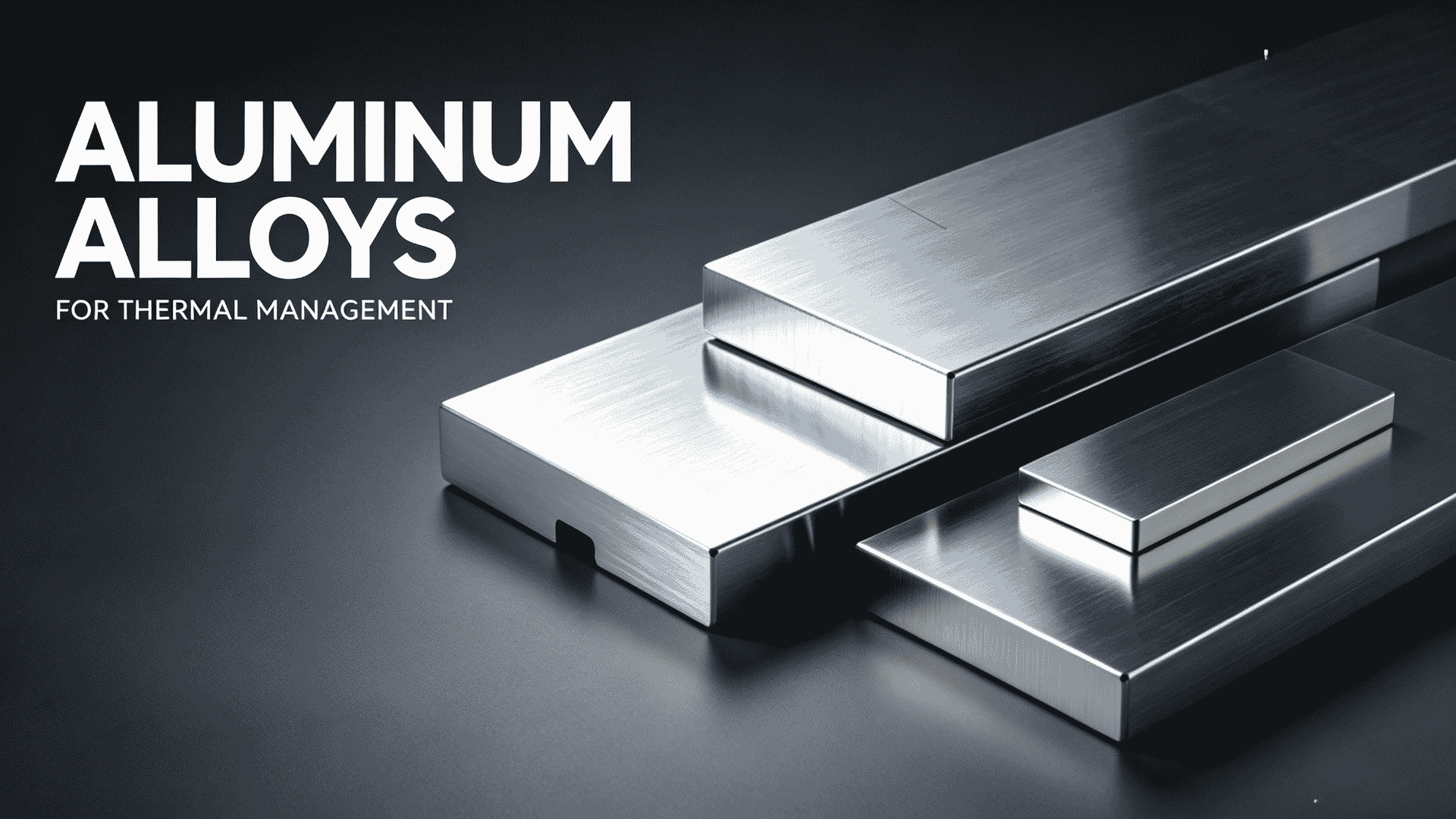
Aluminium alloys are commonly used in
liquid cooling plates and other
thermal management components. When selecting an aluminium alloy, factors such as thermal conductivity, strength, formability, brazing performance, weldability and extrusion performance need to be considered.
1. 3003 – Al-Mn Alloy for Brazing
3003 is an Al-Mn alloy that cannot be strengthened by heat treatment. It has relatively low strength, but offers good formability, corrosion resistance and brazing performance.
Thermal conductivity: Approximately 193 W/(m·K).
Advantages: Good corrosion resistance and formability. It is suitable for stamping, bending and brazed composite structures.
Typical tempers: H14, O.
Thermal Management Applications
• Brazed cores for liquid cooling plates
• Fins and flow channels for heat exchangers, condensers and evaporators
• Base material for vacuum-brazed composite aluminium sheets
2. 5052 / 5A02 – Al-Mg Alloys for Corrosion Resistance
5052 and 5A02 are Al-Mg alloys that cannot be strengthened by heat treatment. They generally offer higher strength than 3003, together with good corrosion resistance and weldability.
Thermal conductivity: Approximately 138 W/(m·K).
Advantages: Good resistance to seawater and humid environments, good corrosion resistance and weldability.
Typical tempers: H32, H34.
Thermal Management Applications
• Covers, side plates and structural components of liquid cooling plates
• Corrosion-resistant structures for energy storage and battery packs
• Welded water cooling radiators
3. 6063 – Al-Mg-Si Alloy for Extrusion
6063 is an Al-Mg-Si alloy that can be strengthened by heat treatment. It offers excellent extrusion performance and good surface finishing properties.
Thermal conductivity: Approximately 200 W/(m·K).
Advantages: Suitable for extruding complex cross-sections and offers good anodising performance.
Typical tempers: T5, T6.
Thermal Management Applications
• Profiled heat sinks and finned heat sinks
• Heat-dissipating housings for inverters and motors
• Battery pack frames and heat dissipation bases
4. 6061 – General-Purpose Structural Aluminium Alloy
6061 is an Al-Mg-Si alloy with relatively high strength and balanced overall properties. It can be heat-treated and offers good weldability and machinability.
Thermal conductivity: Good thermal conductivity, slightly lower than 6063.
Advantages: Relatively high strength, good weldability and machinability, and can be strengthened by heat treatment.
Typical temper: T6.
Thermal Management Applications
• Pressure-bearing structures for liquid cooling plates
• Heat dissipation bases for high-power equipment
• Battery trays and main structures of water cooling plates
5. 6060 – Aluminium Alloy for Precision Extrusion
6060 is an Al-Mg-Si alloy with good extrusion performance. Its strength is between 6063 and 6061, and it is suitable for high-precision and complex thin-wall profiles.
Thermal Management Applications
• Precision heat sinks
• Industrial control equipment housings
• Structural components for liquid cooling assemblies
6. 4xxx Series – Al-Si Alloys for Brazing
4xxx series aluminium alloys are Al-Si alloys commonly used for brazing. 4045 and 4343 are mainly used as brazing materials rather than as the main structural material.
They are commonly used as the brazing layer in aluminium brazing sheets and can be combined with 3003 as the core material. They are an important part of the material system used for brazing liquid cooling plates and heat exchangers.
Thermal Management Applications
• Vacuum-brazed liquid cooling plates and heat exchangers
• Brazing layers in aluminium composite sheets