Electric Vehicle Battery Thermal Management System Explained
Jun 02, 2026
With battery energy density continuing to increase and 4C/5C ultra-fast charging technology rapidly advancing, the Battery Thermal Management System (BTMS) has become one of the key technologies affecting EV safety, driving range, charging efficiency, and battery lifespan.
Currently, liquid cooling thermal management is the mainstream technical route. It provides precise temperature control for batteries under high-temperature, low-temperature, and high-load conditions, helping vehicles maintain stable performance and extending battery life.
This article provides an in-depth analysis of the working principles, core components, advantages of liquid cooling technology, industry challenges, and how GUCHEN's next-generation intelligent BTMS solution addresses future application demands in new energy vehicles.
1. Why Does a Battery Need Thermal Management?
The performance, lifespan, and safety of power batteries—especially lithium-ion batteries—are highly dependent on operating temperature.
Optimal Operating Range
The ideal operating temperature range for a battery is typically between 15°C and 40°C, with the optimal range around 20°C to 35°C.
High-Temperature Risks
Excessively high temperatures (e.g., above 60°C) accelerate capacity degradation, increase internal resistance, and in extreme cases, may trigger thermal runaway, leading to fire or explosion.
Low-Temperature Risks
Low temperatures slow down internal chemical reaction rates, resulting in sharp declines in capacity and power output, difficulty in charging, and possible lithium plating, which damages the battery.
Temperature Imbalance Risks
Uneven temperatures across cells or modules within a battery pack cause inconsistent performance, accelerate overall pack aging, and reduce usable capacity.
Therefore, an efficient thermal management system must maintain the battery temperature within the optimal window and minimize the maximum temperature difference within the pack (ideally ≤3°C).
2. How Does a Liquid Thermal Management System Work?
A liquid thermal management system uses circulating coolant as a medium to control battery cooling and heating.
2.1 Cooling Function
Heat Absorption: Driven by an electric pump, coolant flows through the cold plate (typically in direct contact with battery modules) inside the battery pack, absorbing heat generated during battery operation.
Heat Dissipation: The heated coolant is transported to the front radiator (air-cooled) or exchanges heat with the vehicle's air conditioning system via a Chiller (coolant-refrigerant heat exchanger), releasing heat to the external environment.
The cooled coolant then returns to the battery pack, forming a continuous thermal management loop.
2.2 Heating Function
When the battery temperature falls below the optimal operating range:
The system heats the coolant using a PTC heater (Positive Temperature Coefficient heater).
The heated coolant flows through the cold plate, transferring heat evenly to the battery pack for rapid and uniform warm-up.
In more advanced systems, a plate heat exchanger can recover waste heat from the electric drive system to assist battery heating, improving overall energy efficiency.
3. Key System Components
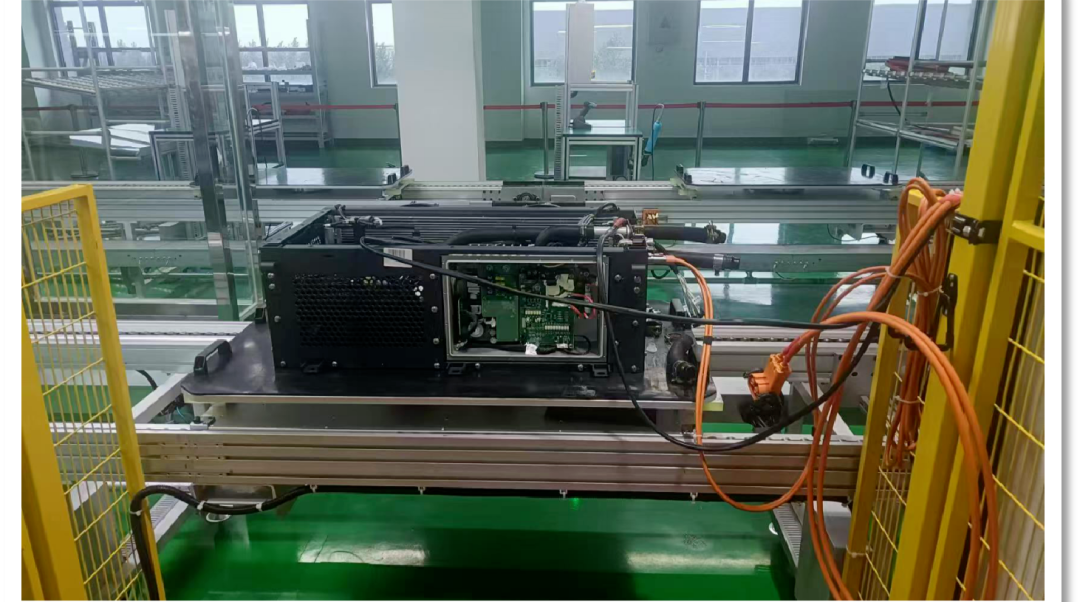
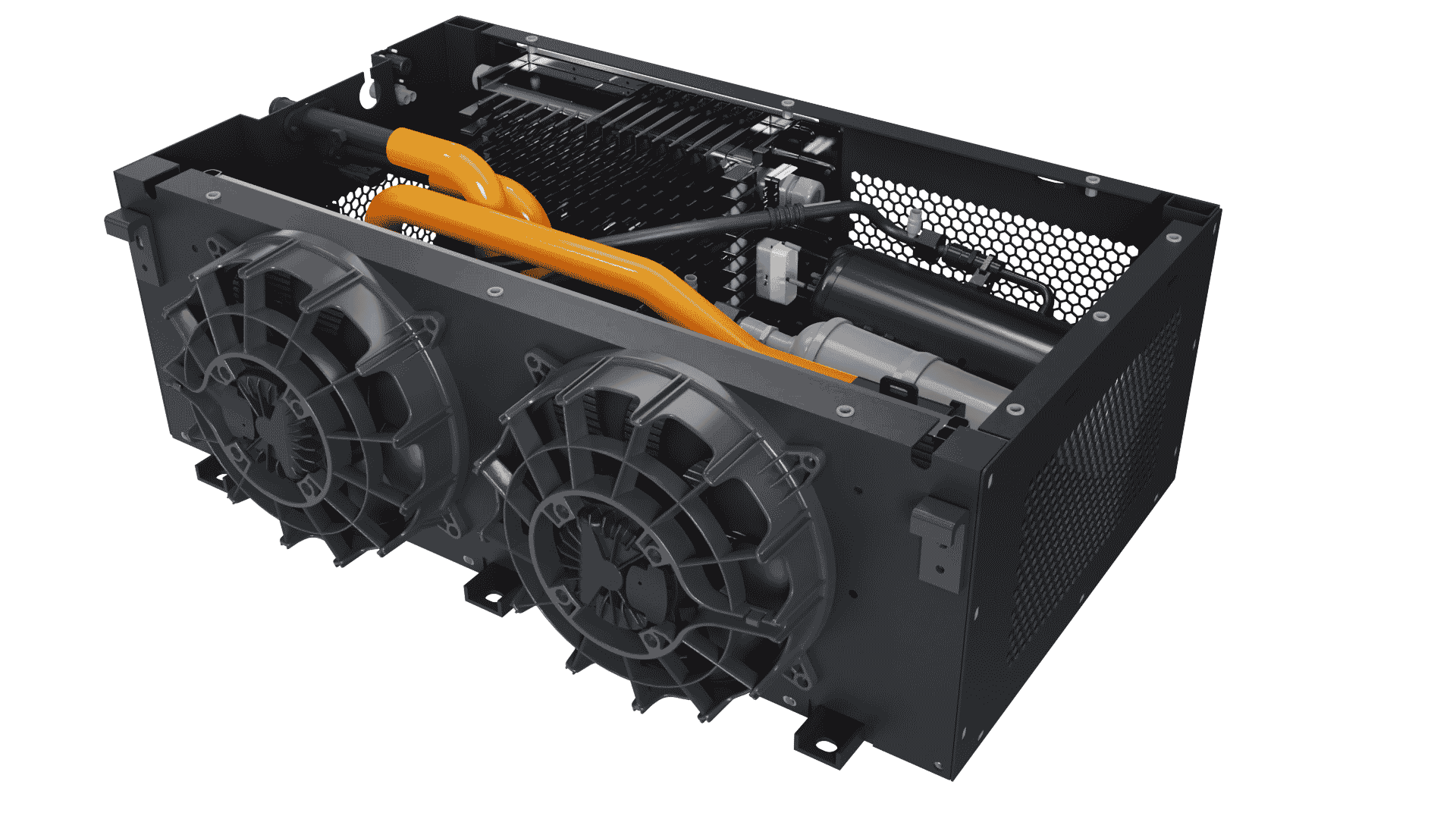
A typical liquid-cooled thermal management system consists of the following core components:
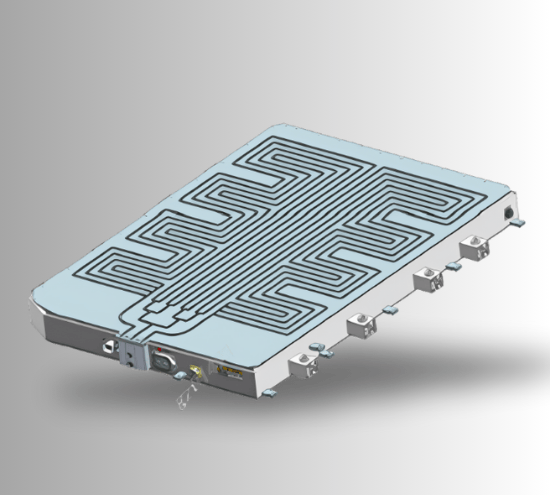
Cold Plate: The core heat exchange component in direct contact with battery modules. Typically made of aluminum with optimized internal flow channels to improve heat transfer efficiency and temperature uniformity.
Coolant: Must have high thermal conductivity, electrical insulation, low viscosity, a wide operating temperature range, and good material compatibility. Common solutions include ethylene glycol-water mixtures and some dielectric coolant systems.
Electric Pump: Drives coolant circulation and enables on-demand flow adjustment via variable speed control, reducing energy consumption.
Heat Exchangers:
Chiller: Connects the cooling loop and the air conditioning refrigeration loop to enhance battery cooling capacity.
Radiator: Typically mounted at the front of the vehicle, dissipates heat from the coolant via airflow.
Plate Heat Exchanger: Used for energy exchange between different thermal loops, commonly applied in waste heat recovery systems.
PTC Heater: Heats the coolant under low-temperature conditions to assist rapid battery warm-up.
Valve System: Includes three-way valves, solenoid valves, etc., to control coolant flow direction and switch between different operating modes (cooling / heating / waste heat recovery).
Reservoir Tank: Compensates for coolant volume changes due to temperature variations and helps remove air and replenish coolant.
Sensors and Control Unit:
Temperature sensors monitor battery and coolant status in real time. The Battery Management System (BMS) or thermal management controller acts as the system core, intelligently adjusting the pump, heater, valves, and air conditioning system based on operational data to achieve dynamic thermal balance control.
4. Advantages of Liquid Thermal Management
• High Heat Exchange Efficiency: Liquids have high specific heat capacity, enabling rapid heat dissipation—ideal for high-load scenarios like fast charging.
• Good Temperature Uniformity: Effectively reduces temperature differences within the battery pack, improving consistency and lifespan.
• Compact Structure: Suitable for highly integrated battery pack designs, increasing space utilization and energy density.
• Wide Operating Range: Supports both cooling and heating, adaptable to complex environments such as extreme cold and high heat.
5. Challenges Facing Battery Thermal Management Systems
As 4C/5C ultra-fast charging gradually becomes a major trend in new energy vehicles (especially commercial vehicles), BTMS is facing unprecedented technical challenges:
• Temperature control precision evolving from "degree-level" to "millidegree-level"
• System response time advancing to the millisecond level
• Increasing requirements for adaptability to extreme conditions (severe cold, high heat, high altitude)
Faced with these challenges, traditional passive thermal management systems are shifting toward intelligent, predictive control.
6. GUCHEN's Next-Generation Intelligent BTMS
Technological Breakthroughs: Three Core Innovations
This is not a simple product iteration, but a paradigm shift in commercial vehicle thermal management technology — from "passive cooling" to "active intelligent control.
6.1 MPC Predictive Control Enables Active Temperature Management
Traditional thermal management systems rely on real-time feedback control. GUCHEN introduces Model Predictive Control (MPC), enabling proactive regulation capabilities.
Technical Principles:
• Builds a battery thermal-electrical coupling model to predict temperature trends over the next 30–60 seconds
• Integrates multi-dimensional data such as road conditions, load, and ambient temperature for strategy optimization
• Achieves continuous closed-loop control through rolling optimization
Test Results:
•Under 4C fast charging, cell temperature difference is controlled within ±2°C
•Energy consumption reduced by 25%–30%
•Control response improved to millisecond level
6.2 All-Climate Thermal Control Technology
• Extreme Cold Environment (-40°C to 0°C)
PTC heating + intelligent preheating strategy; warm-up from -30°C to 15°C takes approximately 15 minutes; energy consumption reduced by 35%
• High-Temperature En vironment (40°C to 85°C)
High-efficiency cold plate design improves heat exchange efficiency by 40%; dual-loop redundant design enhances system reliability
6.3 Digital Twin and AI Integration Platform
• Real-Time Digital Twin Monitoring: Enables visual management of battery thermal status and full lifecycle data tracking
• AI Fault Prediction (PHM): Predicts potential faults 15–30 days in advance with accuracy above 95%
• OTA Remote Optimization: Supports remote strategy updates, enabling "thousands of vehicles, thousands of strategies" intelligent thermal management
Shortened Development Cycles: Provides integrated thermal management solutions from strategy development to calibration validation
Reduced System Costs: High integration design reduces system costs by 15%–20%
Enhanced Global Adaptability: Supports complex application scenarios including cold regions, high heat, deserts, and high altitudes
For End Customers (Fleet Operators)
Improved Operational Efficiency: Shortens fast charging time, increases vehicle availability
Lower Maintenance Costs: AI predictive maintenance reduces unplanned downtime
Enhanced Safety: Thermal runaway response time less than 2 seconds
Extended Battery Life: Precise temperature control reduces battery degradation, increasing full lifecycle value
Conclusion
Going forward, GUCHEN will continue to use quality as a bridge, working hand in hand with global partners to support high-quality industry development with professional strength and responsibility. Through continuous technological innovation and deep scenario cultivation, GUCHEN is committed to making battery thermal management for every commercial vehicle smarter, more reliable, and more efficient.